



Mixed Wood Species Designs: When to Blend Cedar, Fir, Oak & Accents
Mixing wood tones brings warmth into a home and adds a sense of depth that feels lived-in and natural. Careful blending allows different species to read as a unified architectural element.
Material choice gives a home its first impression and carries each door through years of use. Clarity is key. When every wood has a defined role, the composition feels calm and resolved, complementing the broader language of home decor.
Every CAMBEK door is built on materials that give structure its strength and the elevation its character.
Structure Comes First
Every great door begins beneath the surface. Douglas fir and Spruce Pine fir form the structural core of CAMBEK doors because of their strength and dependable dimensional stability. Visually, fir presents a light brown to soft reddish hue, with a straight consistent grain pattern beneath surface materials.
Although classified as a softwood, Douglas fir behaves more like a structural hardwood in practice. Its density and stiffness maintain alignment through daily use and seasonal change, even at the larger sizes required for expansive openings and hurricane-rated doors.
With that stable framework in place, surface woods express their character with ease. Wood grain remains clear across panels and details, giving doors a presence that feels intentional and grounded.
Let the Surface Set the Tone
Once structure is established, exterior materials determine how the door shows up within the elevation. A single dominant wood tone sets the visual direction and helps supporting materials fall into place alongside nearby architectural elements.
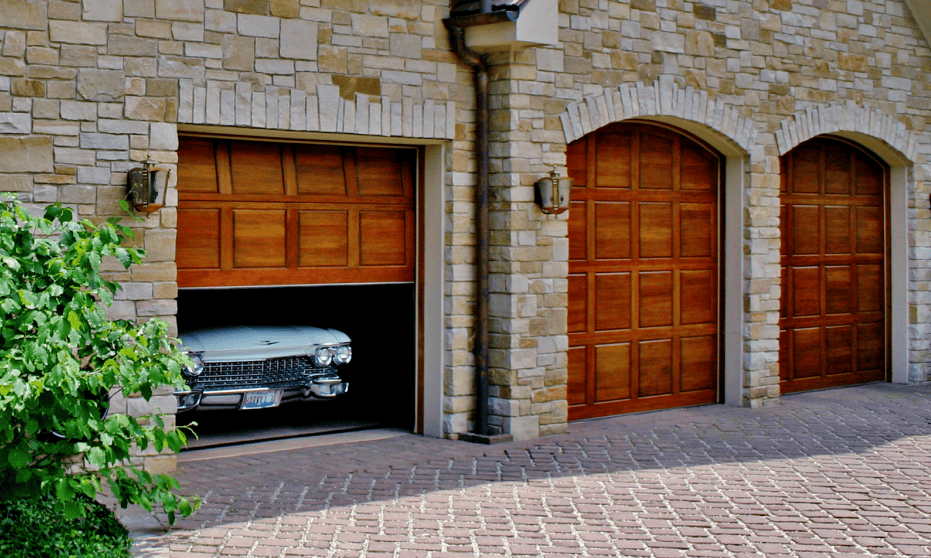
Cedar often leads with a naturally warm tone that softens broad wood surfaces and gives entry and garage doors a welcoming presence. Its color ranges from honeyed ambers to deeper reddish browns, creating warmth that sits comfortably against stone, masonry, or painted finishes.
In more restrained designs, fir or oak introduces a cooler tonal presence that aligns easily with metal, concrete, or contemporary detailing. These shifts guide how doors relate to the rest of the home without calling attention to the material decision itself.
Cedar and Exterior Warmth
Cedar plays a defining role in many mixed wood doors. As a softwood, it is valued for resilience. Its natural resistance to moisture and decay makes it well suited for exposed exterior applications.
Cedar’s grain structure varies naturally, introducing gentle movement across wide surfaces. This variation keeps large panels from feeling flat, especially when paired with transparent or lightly pigmented finishes.
In homes with traditional influence, rustic finishes bring cedar’s texture forward. The effect feels tactile and grounded.
Oak as a Point of Emphasis
Oak appears where the architecture benefits from added visual weight and definition. Red oak brings greater density and presence, along with a pronounced grain pattern that reads clearly from a distance. Its color palette ranges from warm amber to medium brown, offering contrast against lighter woods.
As a hardwood, oak is stronger and more rigid than cedar or fir. CAMBEK uses it selectively, often at moments of arrival such as front entry doors or accent panels that frame an opening.
Oak establishes hierarchy within the elevation. It adds visual importance without overwhelming adjacent materials, allowing the overall composition to remain balanced.
Finishing Everything Together
Finish is where the design settles into itself. Wood stains and carefully selected finish sheens influence how light moves across each surface and how depth is perceived throughout the day.
Transparent stains emphasize grain structure, while more opaque stains soften contrast and unify mixed species. Sheen selection further shapes the reading of the door, affecting how highlights and shadows define panels, rails, and stiles.
When finishes are coordinated, cedar, fir, and oak relate clearly while keeping their individual character intact. This approach helps entry doors, garage doors, and hurricane-rated doors feel connected to one another and to interior wood elements throughout the home.
How This Shows Up Across Door Types
These mixed wood principles carry through CAMBEK’s full range of doors:
- Wood entry doors often carry the strongest expression of material choice, setting the tone for arrival.
- Wood garage doors apply the same hierarchy at larger scale, anchoring the elevation and supporting proportion.
- Hurricane-rated doors use this material logic within an engineered system designed to meet elevated performance requirements, allowing strength and appearance to work together.
Finish continuity and material clarity keep each door feeling considered and architectural.
Design That Feels Complete
Mixed wood design works best when it feels settled. Structure provides confidence. Surface materials shape character. Finish guides how everything connects across the elevation.
Careful blending of wood species produces doors that are structurally sound and architecturally resolved. Each wood plays its role, allowing natural materials to express warmth, structure, and character through a composition that feels considered from every angle.
View custom doors shaped by material clarity and craft.
Get in Touch with Cambek
Share On


