



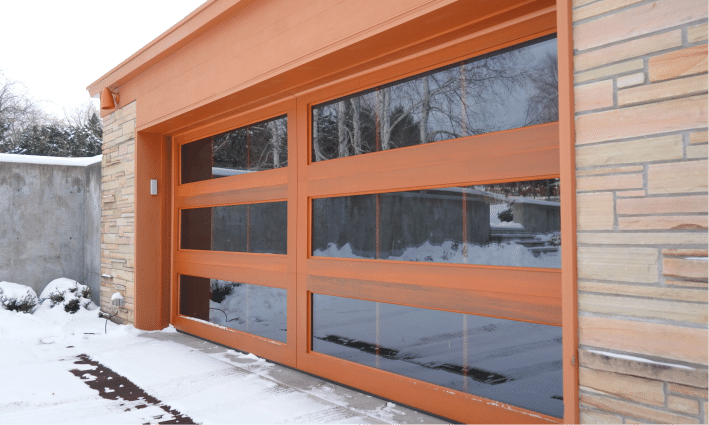
Cold-Climate Performance: Designing Doors for Northern Winters
Wood Garage Door Insulation for Northern Homes
Living in a northern climate doesn’t mean you can’t have a wood garage door. When engineered to handle seasonal swings in temperature and humidity, quality wood doors can withstand northern winters for decades. Fiberglass and steel doors can mimic the look of wood, but they can’t fully replicate its grain, texture, and feel.
Handcrafted with a foam-insulated core, CAMBEK doors perform as well as they look, even in states with extreme winter weather.
Why Northern Winters Are Hard on Wood Garage Doors
We handcraft every CAMBEK door in our River Falls, Wisconsin, shop. Our team knows what it’s like to live and work in freezing temperatures, heavy snow, and constant moisture. We also understand how our materials perform in harsh weather.
Wood expands and contracts with the seasons, exerting steady pressure on joinery, paint, and weatherstripping. Add water seeping into seams or pooling around glass, and wear accelerates. Heavy winds stress seals, hardware, and framing. That’s why effective wood garage door insulation is only part of the solution. The entire door must be designed to withstand cold and moisture and to accommodate movement.
How CAMBEK Insulates Custom Wood Garage Doors
We build insulation into the core of every door. Custom construction can measure 2¾ to 3½ inches thick. Each section contains 1⅜-inch polystyrene foam insulation within a Douglas fir frame and is finished with furniture-grade backing on the interior face.
Section depth, wood species, and insulation options vary by design. For example, CAMBEK Classics carriage-style doors feature a 2-inch section with a 1-inch polystyrene foam core and an all-wood frame made of spruce, pine, and fir. Whatever the design, you get an insulated door without sacrificing the warmth of real wood.
For a closer look, read The Importance of Wood Garage Doors in Home Insulation.
Keeping Water Away From the Wood
Water is wood’s biggest threat. It enters through seams, joints, and exposed end grain, so we focus on those areas. A 45° beveled drip cap and 10° beveled trim shed water away from joints and prevent pooling where trim pieces meet. Horizontal boards cap the vertical end grain. Shiplap joints connect the sections, closing the gaps between them.
Windows That Stay Sealed in the Cold
Garage door windows, or lites, let in natural light. In a northern climate, they must stay sealed. Our wet-glazed windows are set in flexible glazing compounds that help keep water out and maintain their seal in cold weather. CAMBEK Classics offer clear double-strength or insulated clear glass. Fully custom doors can use any type of glass, and we build each door for your climate. You can learn more about wet-glazing here: Why Your Garage Door Windows Should Be Wet-Glazed.
Sealing the Perimeter
An insulated door won’t do much good if cold air slips in around the edges where the door meets the frame and the floor. Weatherstripping closes those gaps. It reduces air leaks, keeps moisture out, and helps the door stay energy-efficient. On a custom door, you can match the color to complement your design. For our Classics line, we offer dark brown, white, or sandstone.
Wood Finishes Built for Freeze and Thaw
In a cold climate, a protective finish has to flex as the wood moves. Our three-coat stain or paint finish won’t crack, flake, chalk, blister, or lift. It shields the door from rain, snow, and moisture while still letting the wood breathe. Often the hardest question is whether to choose paint or stain. Both options protect your door, how they look doing it up to you.
Simple Seasonal Care
Real wood requires more care than imitation materials. Follow the recommended finish guidelines, which usually means reapplying the topcoat every two to three years, a job that typically takes an hour or two. No sanding. No scraping.
A few simple habits keep your door and seals in good shape:
- Replace weatherstripping when it loses flexibility or fails to compress.
- Clean the door with mild soap and water every spring and fall.
- After big storms, check windows and seals for gaps or moisture.
And if a section is ever damaged, wood has another advantage: it can be repaired. Impact damage to one section doesn’t require replacing the whole door.
Designed for Northern Living
A wood garage door that performs in winter works as a complete system. The foam core provides insulation. Drip caps, joints, weatherstripping, and the finish keep moisture out.
Built right, a real wood door is a practical option for any northern home. We put the same craftsmanship into our hurricane-rated doors for coastal climates. Many CAMBEK doors installed in the 1980s and 1990s are still in service today, and we can repair them when they need attention.
Ready to explore your garage door options? Visit our Gallery for inspiration, or schedule a complimentary design consultation with the CAMBEK team.
Get in Touch with Cambek
Share On


