



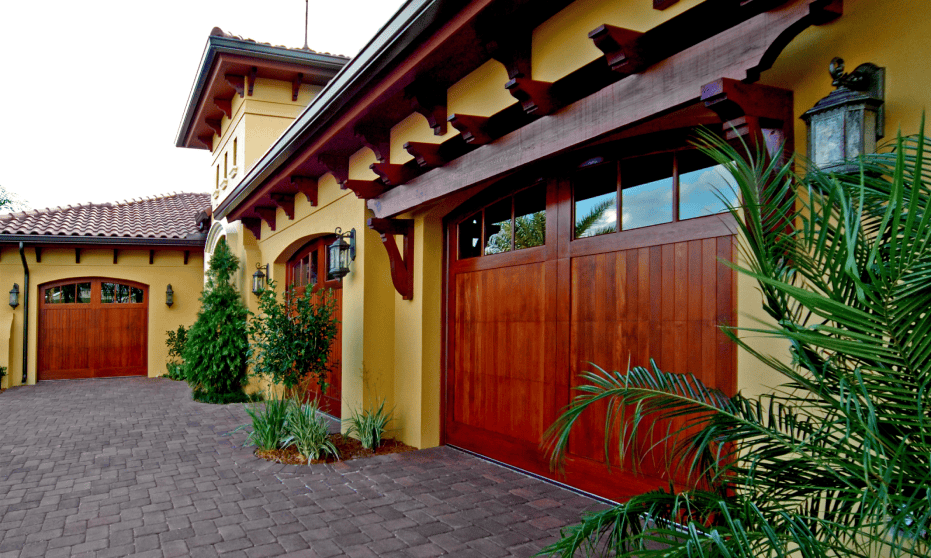
The New Standard in Hurricane-Rated Coastal Door Design
There is a particular quality of life along the water. The vast horizon line, salt air, and the rumble of waves are constant. People who build on the coast are there for a reason, and they understand better than most what it means for a home to hold up against the elements.
In hurricane-prone areas, a garage door faces wind-driven rain, pressure that builds and releases in seconds, and salt air that challenges every unprotected surface, season after season.
What the Coast Asks of a Garage Door
A hurricane is the event most people think about: intense winds, airborne debris, and the kind of force that tests a structure in seconds. But the damage that shortens the life of most coastal garage doors accumulates more slowly, in the seasons before and after any storm.
Humidity infiltrates every unsealed surface. The salty air accelerates the breakdown of unprotected wood. Temperature cycling opens seams, and moisture finds its way into interior cavities where rot sets in. Building a garage door that holds against both requires a different approach to material, construction, and finish, starting with the first board and carrying through to the final seal.
CAMBEK Hurricane-Rated Garage Doors fuse timeless beauty with superior durability. Each door features a sturdy Douglas fir reinforced frame, impact-rated glass glazing, a nanotechnology finish that repels moisture and UV rays, and a patented wind load-rated design. These custom garage doors are built to withstand everything nature brings to coastal and storm-prone regions. CAMBEK holds U.S. Patent 7,299,853 for our hurricane-rated garage door design.
Approved by Stringent Building Codes
All garage doors in this fully customizable line are specifically designed to withstand the high wind loads, extreme pressure changes, and the relentless moisture of hurricane-prone areas, from inland tornado-prone regions to windborne debris zones such as the Florida coast. These hurricane-rated garage doors are tested to nationally recognized protocols, including the FBC Schedule 1 D Engineering Evaluation, equivalent to Miami-Dade County NOA, and the Florida Building Code product approval, two of the most stringent building codes relative to hurricane-force winds and impact rating.
Expert Seals Are Critical
Moisture control begins before a single board is fastened. Every void between material layers is filled with clear acrylic caulking to prevent water entering at the source. Trim board material is back sealed before it is applied to the door. The back side of all tongue and groove material receives the same care. Trim board ends that do not terminate at a section break are sealed before application. All six sides of the internal Douglas fir frame at the bottom section, where exposure to coastal weather conditions is greatest, are fully sealed prior to assembly. The entire routed area for the drip cap is sealed before it is set.
Water Has Nowhere to Pool
Water direction is considered with the same care as sealing. A beveled trim board beneath each lite section sheds water and prevents pooling at the glass line. A drip cap and beveled molding recessed along the top edge of the bottom trim board prevent water from pooling on the bottom board and seeping into the garage door. This keeps the structure protected from mold and wood rot. At the base of every door, a horizontal cap board seals off the end grain of the tongue and groove surface material entirely, stopping the wicking of rain and moisture at ground level.
Managing Moisture from Within
Moisture control works in two directions: keeping it out and managing what gets in. Vent holes are drilled into each section of the garage door’s interior to facilitate the natural movement of moisture caused by temperature and humidity changes, preventing damaging buildup from water infiltration within the interior cavity. Each piece of impact-rated glass is wet glazed, held in place by a continuous bead of sealant, delivering both storm protection and impact resistance at every opening. Borate rods are embedded into the reinforced Douglas fir frame before millwork and trim boards are applied, deterring fungal decay and insect damage from within the structural connections.
Sealed at Every Junction
The finest materials deliver their full value only when every transition is properly sealed, and every component is built to perform in the same environment as the garage door itself. CAMBEK Hurricane-Rated Garage Doors are built with high-performance weatherstripping that maintains compression through repeated use and seasonal movement. Multi-point locking systems and adjustable thresholds hold consistent contact with the floor plane as the structure shifts, reinforcing both security and storm protection. Glass panels are specified with insulated glazing units using double or triple-pane impact-resistant glass, delivering thermal performance and hurricane protection alongside the moisture and impact resistance standards required for coastal homes.
Hardware That Holds In Humid Climates
Galvanized steel tracks and cast aluminum hardware are powder coated for coastal weather conditions, delivering the look of wrought iron with quieter operation and less maintenance. Every fastener, hinge, and track component is selected to perform in salt air without corroding, pitting, or losing tension. Effective sealing and purpose-built hardware protect against water pressure and wind intrusion while improving energy efficiency. In a coastal environment, they are what separates a garage door that performs for decades from one that only looks right at installation.
Designed for the Architecture of the Coast
Coastal homes today are built to take the environment seriously, with elevated structures and facades that age gracefully in salt air. Whether your home is a contemporary Cape Cod, a New England shingle home, or a barrier island property designed for beachfront living, a CAMBEK Hurricane-Rated Garage Door is designed to belong there.
Schedule your design consultation with the CAMBEK team.
Get in Touch with Cambek
Share On


