



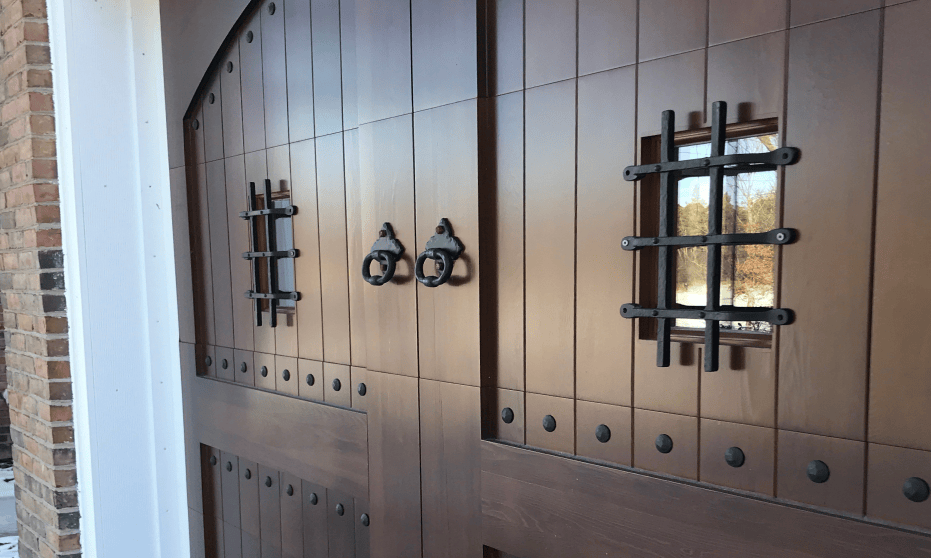
Integrating Metal Inlays & Accents Into Modern Wood Door Designs
Contemporary architectural aesthetics are defined by restraint and proportion. Wood establishes warmth and depth. Metal introduces precision and definition. When artfully paired, the two create architectural accents that elevate both form and function across a home’s exterior and interior.
This dialogue is most evident at the main entrance. The front door sets the tone for the entire property, shaping first impressions and daily experience alike. Thoughtfully integrated metal inlays refine wood door designs by reinforcing geometry, guiding proportion, and introducing contrast that feels intentional.
Material Selection as the Foundation of Design
Material selection defines every modern luxury door. Wood provides surface, grain, and scale. Metal sharpens edges, clarifies transitions, and introduces control. When composed with care, the result reflects design grounded in traditional craftsmanship.
CAMBEK integrates wrought iron, stainless steel, bronze, and brass into wood front doors, interior doors, and select exterior elements. Brass and copper inlays often appear as fine linear details or restrained geometric forms. Finished in custom brass, bronze, or patinated tones, these accents add depth while preserving the visual language of the wood surface.
Architectural Styles and Expression
Mid-Century Modern Influence
Mid-century modern architecture often pairs metal with natural materials such as wood. Steel, aluminum, chrome, and brass appear in functional, forward-looking forms that emphasize structure and clarity. In wood doors inspired by this style, metal inlays often trace clean lines, frame glass panels, or appear as subtle perimeter details. Wood brings warmth. Metal reinforces proportion and architectural clarity.
Contemporary and Modern Luxury Homes
In contemporary settings, stainless steel and brass accents align naturally with glass, stone, and concrete. Pivot doors and sliding doors benefit from integrated metal details that visually reinforce scale and articulate movement while maintaining surface continuity. These doors often accommodate smart technology, allowing security features and access systems to integrate seamlessly into the design.
Interior and Exterior Continuity
Interior doors frequently echo the material language of the main entry. Coordinated metals, aligned geometry, and custom finishes create a smooth transition from exterior to interior, reinforcing a cohesive architectural experience throughout the home.
Geometry, Line, and Detail
Metal accents often appear as linear elements or controlled geometric patterns. Vertical inlays emphasize height at the entry. Horizontal lines establish rhythm across wide sliding doors. These details guide the eye while keeping the surface visually composed.
Metal also defines transitions. Thin metal reveals around glass panels or along door edges create crisp boundaries, allowing wood surfaces to settle confidently within the architecture.
Across pivot doors, front entry doors, interior doors, and gates, these details function as architectural accents that unify the design without repetition.
A Brief History of Metal and Wood Design
Throughout Western architectural history, the pairing of metal and wood has served both functional and expressive roles. From European carriage houses and fortified gates to early industrial and modernist architecture, metal elements were introduced where durability, articulation, and definition were required, while wood provided scale, warmth, and craftsmanship.
Traditional construction relied on proven systems such as mortise-and-tenon joinery to allow wood surfaces to move naturally and age gracefully, with metal components reinforcing edges, transitions, and points of wear. These principles remain foundational to CAMBEK construction today, where metal accents are integrated with respect for material behavior, proportion, and long-term performance.
Performance, Technology, and Security
Integrated metal accents support both durability and longevity. Designed as part of the door assembly, they account for movement, scale, and daily use. This becomes especially important in designs at scale.
Security features are incorporated with the same level of discipline. Smart technology, locking systems, and access controls are accommodated within the structure of the door, so protection and performance enhance the design without disrupting it.
A Unified Architectural Statement
When metal accents appear consistently across the main door, interior doors, and supporting exterior elements, the home reads as a unified composition. Materials repeat with purpose. Proportions align. Each element relates naturally to the next.
At CAMBEK, metal inlays and accents are chosen to reinforce structure, guide proportion, and clarify surface. Wrought iron, stainless steel, bronze, and brass are paired with wood through disciplined material selection and custom finishing. The result is doors that express modern luxury through balance, durability, and architectural intent.
Wood and metal work together to create entrances that feel confident, enduring, and resolved—an expression of contemporary design grounded in craft and precision.
Connect with our team to begin a custom design conversation.
Get in Touch with Cambek
Share On


